


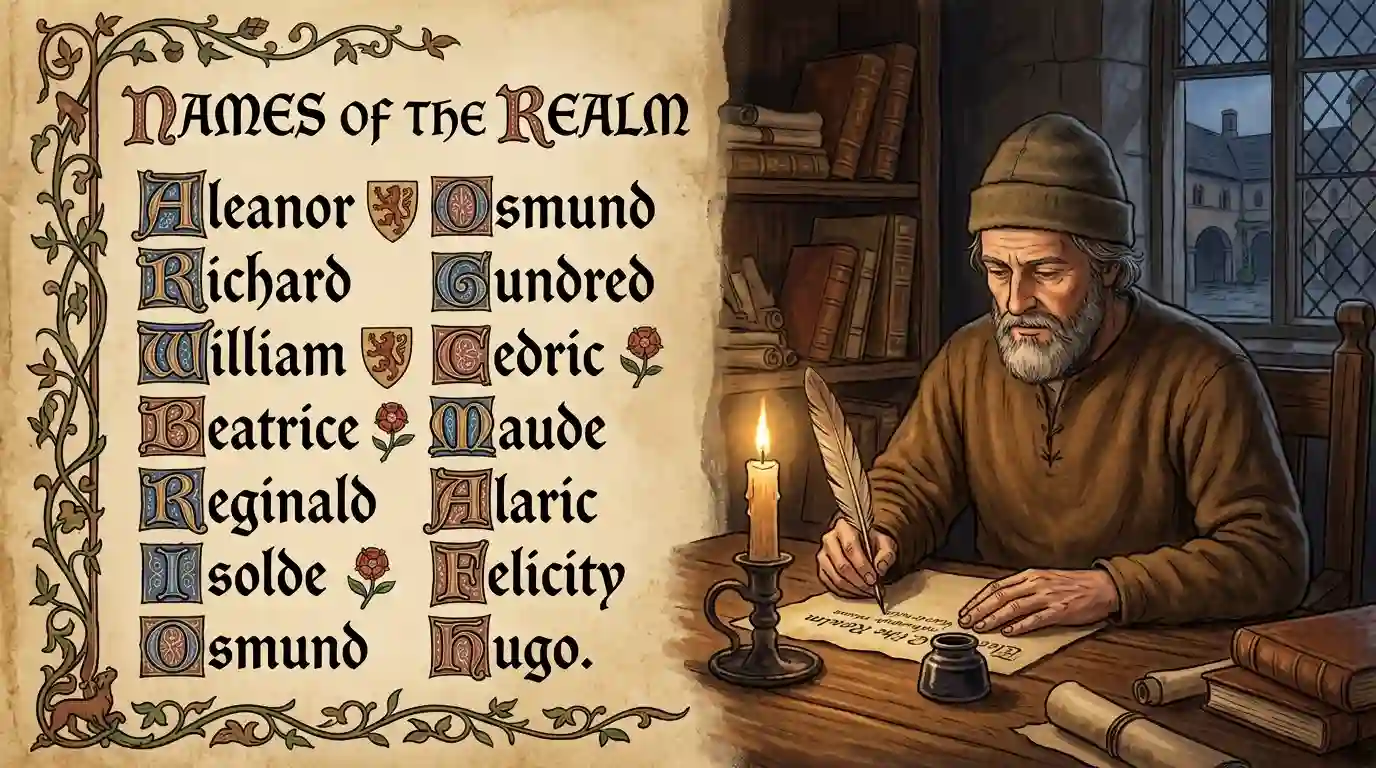
Medieval names during the Middle Ages. These names can sound strong, beautiful, royal, simple, or mysterious.
The Middle Ages lasted for many years. People in different parts of Europe used different naming styles. English, French, German, Irish, Scottish, Welsh, Italian, Spanish, Scandinavian, and Slavic names all had their own traditions.
People search for medieval names for many reasons. Some want a name for a baby. Others need a name for a book, game, story, character, pet, or fantasy world.
How Did People Choose Medieval Names?
People in the Middle Ages often chose names from their family, religion, culture, or local language.
Some children were named after parents or other family members.
A person might be known by:
- Their father’s name
- Their job
- Their home or village
- A nickname
- A personal feature
- Their social position
A name could have an English, French, Latin, Welsh, Gaelic, or German form.
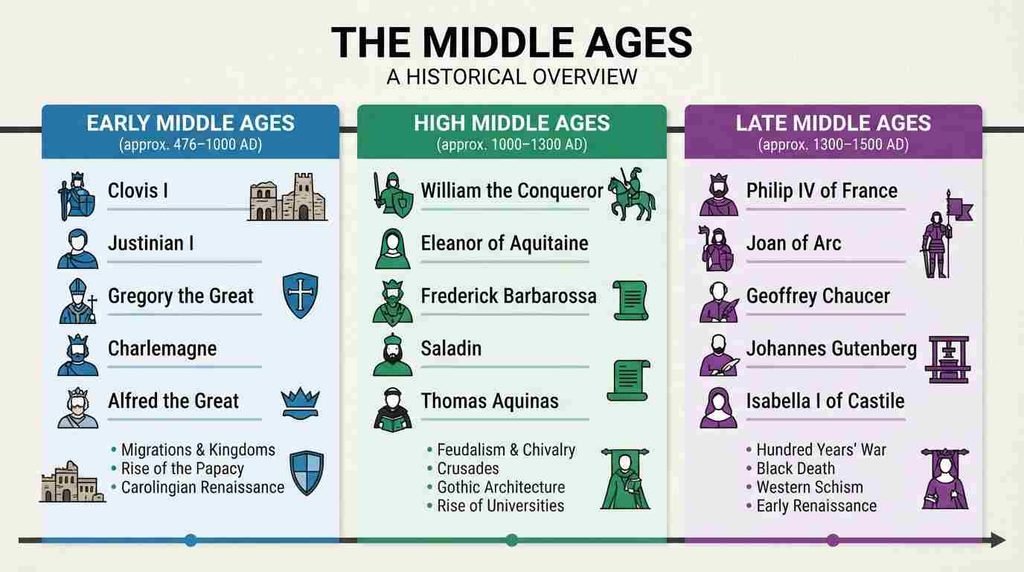
Medieval Names by Time Period
Medieval names changed over time.
Early Medieval Names
Early medieval names often used older Germanic, Celtic, Gaelic, and other local naming traditions.
Examples include:
- Eadric
- Leofric
- Wulfric
- Godwin
- Aelfric
- Aethelred
- Brochfael
- Cináed
- Eochaidh
High Medieval Names
During the High Middle Ages, names from Norman and French traditions became more common in England and other places.
Examples include:
- William
- Henry
- Robert
- Richard
- Geoffrey
- Hugh
- Matilda
- Eleanor
- Alice
- Margaret
Late Medieval Names
Later medieval names included many forms that are still familiar today.
Examples include:
- John
- Thomas
- Edward
- Richard
- Catherine
- Elizabeth
- Joan
- Anne
- Margaret
Medieval Names for Boys
Here are some popular medieval names for boys:
| Name | Style |
| William | English and Norman |
| Henry | English and French |
| Richard | English and Norman |
| Edward | English |
| Robert | Norman and English |
| Thomas | Medieval Christian |
| John | Medieval European |
| Geoffrey | Norman |
| Hugh | French and Norman |
| Roger | Norman |
| Walter | Germanic and English |
| Ralph | English and Norman |
| Stephen | Medieval European |
| Philip | Medieval European |
| Edmund | Old English |
Other medieval boy names include:
- Anselm
- Archibald
- Arthur
- Baldwin
- Godfrey
- Gilbert
- Oswald
- Roland
- Konrad
- Dietrich
- Harald
- Olaf
- Malcolm
- Duncan
Medieval Girl Names
Medieval girl names can sound soft, royal, classic, or unusual.
Popular examples include:
- Alice
- Matilda
- Eleanor
- Joan
- Agnes
- Margaret
- Isabella
- Catherine
- Beatrice
- Edith
- Emma
- Cecily
- Anne
- Rose
- Elizabeth
Other medieval female names include:
- Aveline
- Hawise
- Maud
- Adelheid
- Angharad
- Gormlaith
- Ragnhild
- Astrid
- Gwenllian
- Áine
- Isabeau
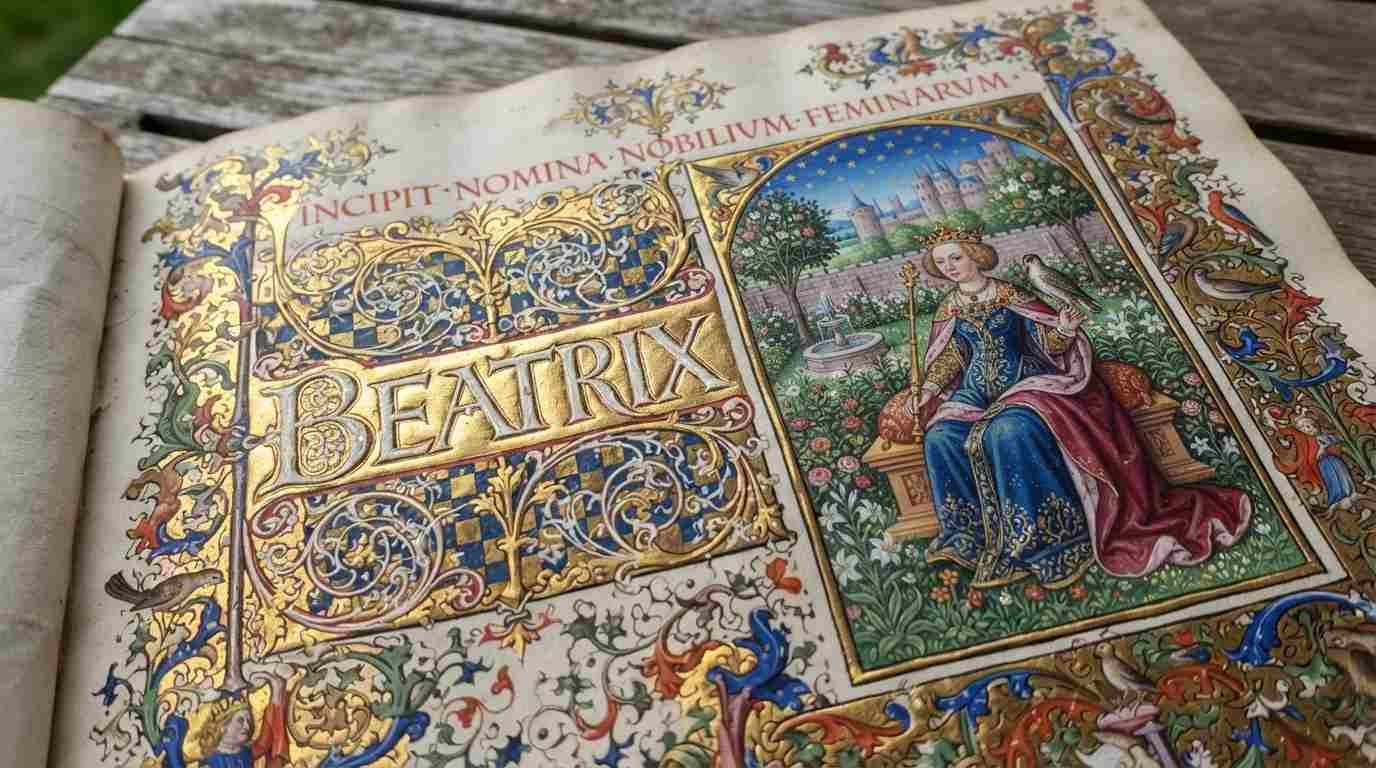
Medieval Male Names
Medieval male names were used in many parts of Europe.
Some strong choices are:
- William
- Henry
- Richard
- Robert
- Edward
- Thomas
- John
- Geoffrey
- Hugh
- Roger
- Walter
- Ralph
- Stephen
- Philip
- Edmund
- Arthur
- Roland
- Godfrey
- Gilbert
- Baldwin
- Anselm
- Archibald
- Konrad
- Dietrich
- Harald
- Olaf
- Malcolm
- Duncan
Medieval Female Names
Here are some beautiful medieval female names:
- Alice
- Matilda
- Eleanor
- Margaret
- Isabella
- Agnes
- Joan
- Edith
- Emma
- Beatrice
- Catherine
- Cecily
- Anne
- Elizabeth
- Rose
- Aveline
- Hawise
- Maud
- Adelheid
- Astrid
- Gwenllian
- Áine
Medieval Names With Meanings
Many medieval names came from older words. Their meanings are often related to family, strength, peace, beauty, protection, or religion.
| Name | Simple Meaning |
| William | Strong protection |
| Robert | Bright fame |
| Richard | Strong ruler |
| Edward | Wealthy protector |
| Edmund | Protection and wealth |
| Margaret | Pearl |
| Agnes | Pure |
| Beatrice | Happy or blessed |
| Matilda | Strength in battle |
| Alexander | Defender of people |
| Godfrey | Peace with God |
| Arthur | Old historical name with a debated meaning |
Name meanings can change between languages and old forms.
Common Medieval Names
Some names were very common in medieval Europe.
Common Medieval Boy Names
- William
- John
- Richard
- Henry
- Robert
- Thomas
- Edward
Common Medieval Girl Names
- Alice
- Matilda
- Joan
- Margaret
- Agnes
- Isabella
These names are useful when you want a simple and believable medieval character.
Unique Medieval Names
If you want medieval names that sound less common, try:
- Aveline
- Hawise
- Cecily
- Rohese
- Millicent
- Anselm
- Godfrey
- Oswald
- Everard
- Baldwin
- Leofric
- Wulfric
- Eadric
- Adelheid
- Angharad
- Iudicael
- Judoc
- Ragnailt
Some old recorded names can look especially unusual today, such as:
- Achard
- Aceline
- Adalfrid
- Adalgis
- Amice
- Bonaccorso
- Enguerran
- Eudes
- Ferrante
Old Medieval Names
If you want very old-sounding names, consider:
- Eadric
- Leofric
- Oswald
- Wulfric
- Edmund
- Godwin
- Aldred
- Aelfric
- Aethelred
- Anselm
- Brochfael
- Cináed
- Eochaidh
- Máel Coluim
These names can work well for historical stories and old-world characters.
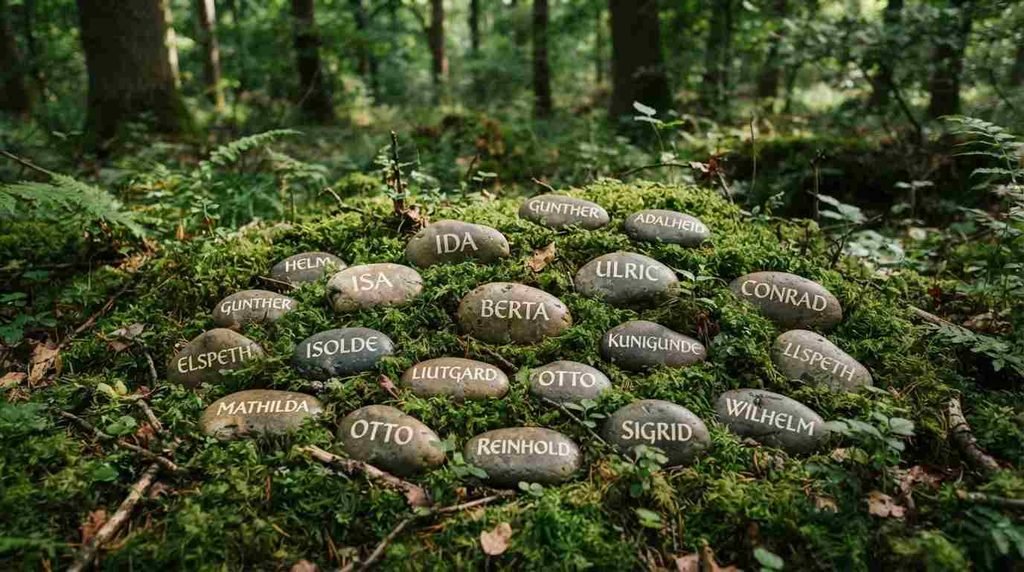
Cool Medieval Names
Some medieval names have a strong and memorable sound.
Cool Male Names
- Roland
- Godfrey
- Baldwin
- Tristan
- Arthur
- Cedric
Cool Female Names
- Eleanor
- Isolde
- Matilda
- Guinevere
- Morgana
- Rowena
- Rhiannon
- Gwenllian
Medieval Names by Country
Medieval Europe had many different languages and naming traditions.
Some important groups include:
- English
- French
- Norman
- German
- Irish
- Scottish
- Welsh
- Italian
- Spanish
- Portuguese
- Scandinavian
- Slavic
- Breton
Latin was also used in many medieval records.
Medieval English Names
Popular medieval English names include:
- William
- Henry
- Edward
- Edmund
- Robert
- John
- Thomas
- Richard
- Alice
- Edith
- Matilda
- Margaret
- Joan
- Agnes
- Eadric
- Leofric
- Godwin
- Aldred
- Hawise
- Rohese
Some names also had different short forms.
For example, forms connected with John included:
- Jehan
- Jan
- Jackin
- Jankin
Medieval French Names
French and Norman names were important during the medieval period.
Examples include:
- Guillaume
- Jean
- Philippe
- Henri
- Pierre
- Louis
- Hugues
- Robert
- Isabelle
- Marguerite
- Jeanne
- Agnès
- Éléonore
- Béatrice
- Aalis
- Achard
- Aimery
- Enguerran
- Eudes
- Isabeau
- Jehan
- Jehanne
Medieval German Names
Germanic naming traditions often used name parts connected with ideas such as strength, fame, protection, and battle.
Examples include:
- Heinrich
- Friedrich
- Konrad
- Dietrich
- Albrecht
- Gottfried
- Ludwig
- Gerhard
- Adelheid
- Gertrud
- Hedwig
- Mathilde
- Gisela
- Kunigunde
Medieval Italian Names
Some medieval Italian names include:
- Giovanni
- Pietro
- Matteo
- Francesco
- Lorenzo
- Guido
- Federico
- Marco
- Caterina
- Beatrice
- Lucia
- Francesca
- Ferrante
- Arlotto
- Bonaccorso
- Petruccio
Medieval Spanish Names
Medieval Spanish names include:
- Alfonso
- Fernando
- Sancho
- Rodrigo
- Diego
- Pedro
- Juan
- García
- Isabel
- Leonor
- Teresa
- Elvira
- Nuño
- Garsea
- Didacus
Medieval Irish Names
Irish medieval names often came from Gaelic naming traditions.
Examples include:
- Brian
- Cormac
- Donnchadh
- Tadhg
- Aed
- Áine
- Gormlaith
- Mór
- Sadb
- Eochaidh
- Conaire
- Aengus
- Caiside
- Ciardha
- Calbhach
- Raghnailt
Old Irish names can have spellings that look very different from modern English names.
Medieval Welsh Names
Welsh medieval names include:
- Llywelyn
- Rhys
- Owain
- Gruffudd
- Madog
- Hywel
- Gwenllian
- Angharad
- Nest
- Efa
- Arthfael
- Brochfael
- Cynbel
- Iudicael
- Judoc
Welsh names can be a good choice for a character from medieval Wales.
Medieval Scottish Names
Medieval Scotland had Gaelic, Norse, Norman, Welsh, and English influences.
Examples include:
- Malcolm
- Duncan
- Kenneth
- Alexander
- Robert
- David
- Angus
- Donald
- Margaret
- Isabella
- Euphemia
- Marjorie
- Máel Coluim
- Cináed
- Ragnall
Medieval Scandinavian Names
Scandinavian medieval names were often connected with Old Norse traditions.
Examples include:
- Erik
- Harald
- Olaf
- Leif
- Bjorn
- Sven
- Knut
- Magnus
- Astrid
- Ingrid
- Freydis
- Sigrid
- Ragnhild
- Ragnvaldr
- Gorm
Medieval Slavic Names
Medieval Slavic names can have a strong and old-world sound.
Examples include:
- Boris
- Bogumir
- Bratomil
- Bratoslav
- Čestislav
- Dmitrii
- Gleb
- Igor
- Kiril
- Kresimir
- Ladislaus
- Ninoslav
- Priboslav
- Premysl
- Siemowit
Medieval Knight Names
Medieval knight names often sound strong and noble.
Good choices include:
- William
- Richard
- Robert
- Geoffrey
- Hugh
- Roger
- Roland
- Godfrey
- Baldwin
- Walter
- Henry
- Thomas
For a fictional story, you can add a place or title:
- Sir William of Ashford
- Sir Robert of Green Vale
- Sir Henry of Stonebridge
These last examples are fictional medieval-style names.
Medieval Royal Names
Royal names can give a character a powerful and noble feeling.
Male Royal Names
- William
- Henry
- Richard
- Edward
- John
- Robert
- Philip
- Louis
- Charles
Female Royal Names
- Eleanor
- Matilda
- Isabella
- Margaret
- Catherine
Medieval Peasant Names
Not every medieval person was a king or knight. Most people lived ordinary lives and worked in villages and towns.
Common jobs included:
- Farmer
- Baker
- Blacksmith
- Fisherman
- Trader
- Craft worker
- Servant
Names such as John, Agnes, and Margaret can work well for ordinary medieval characters.
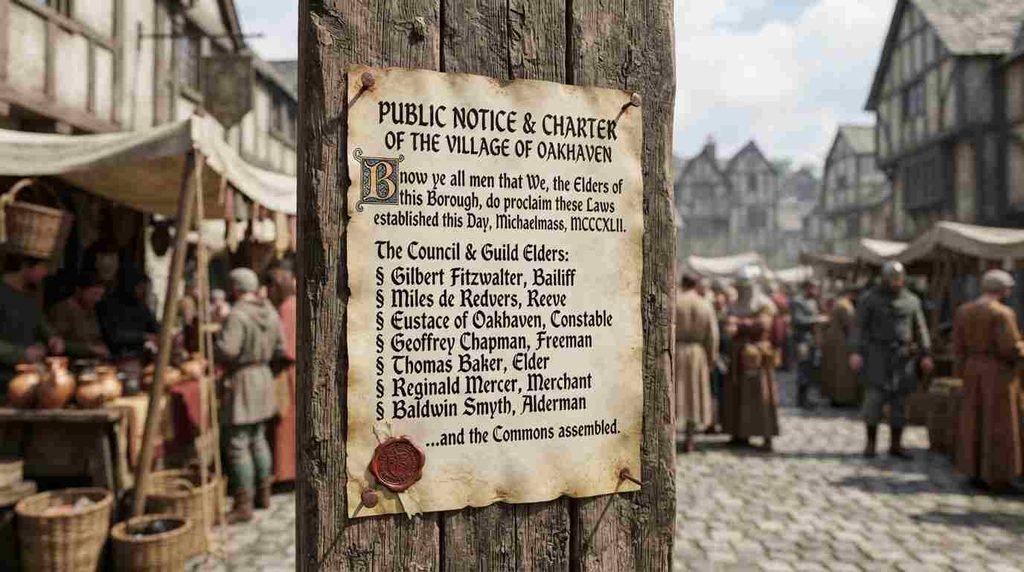
Medieval Last Names
Medieval last names did not always work like modern family surnames.
People could have a byname to explain who they were.
A byname could come from:
- A father’s name
- A place
- A job
- A nickname
- A physical feature
- A personal quality
Job-based names later became common surnames in many places.
Examples include:
- Smith
- Baker
- Fisher
- Miller
- Cooper
How Medieval Surnames Were Made
Medieval surnames developed slowly. Different places used different systems.
Job Names
A person’s job could become part of their name.
Examples include Smith, Baker, Miller, and Cooper.
Place Names
A person could be connected with a town, village, river, hill, or other place.
Family Names
A name could show a person’s family or parents.
Nicknames
A person’s appearance, personality, or another feature could become a byname.
Not every medieval byname became a permanent family surname.
Medieval Name Forms and Spellings
Medieval names could have many spellings.
Records were written in languages such as:
- Latin
- Old English
- Middle English
- Old French
- Norman French
- Gaelic
- Welsh
- Germanic languages
A name could also have a short form or local form.
This is why the same person may appear with different spellings in old records.
Dark Medieval Names
Dark medieval names are useful for mysterious.
Dark Male Names
- Godric
- Wulfric
- Aldric
- Oswin
- Grimwald
- Morcant
Dark Female Names
- Morgana
- Isolde
- Rhiannon
- Maud
Some of these are historical names, while others are better described as medieval-inspired or fantasy-style names. Always check the history if you need a fully accurate name.
Fantasy Medieval Names
Fantasy medieval names are popular in:
- Fantasy books
- Video games
- Role-playing games
- Tabletop games
- Fictional kingdoms
- Worldbuilding
- Character creation
Fantasy-style examples include:
- Alric Stormvale
- Elowen Blackwood
- Cedric Thorn
- Isolde Ravenshire
- Rowena Ashford
These are fictional names made to sound medieval. They should not be treated as real historical names.
Real Medieval Names vs Fantasy Names
There is an important difference between real medieval names and fantasy medieval names.
Real medieval names have evidence from historical records.
Medieval-inspired names use an old style but may not be an exact historical form.
Fantasy medieval names are created for stories, games, or fictional worlds.
For example, William is a real historical name.
William Stormvale is a fictional medieval-style combination.
Knowing this difference helps you choose the right name for your project.
Medieval Names for Characters
A good medieval character name should match the character and their world.
Think about:
- Country
- Time period
- Language
- Gender
- Family
- Social class
- Religion
- Personality
- Character role
You may need different names for:
- Heroes
- Villains
- Knights
- Kings
- Queens
- Merchants
- Farmers
- Wizards
- Witches
- Warriors
A noble character may need a different style from a village farmer.
Medieval Town Names
Medieval town names can be inspired by places and landmarks.
A town could be named after:
- A river
- A hill
- A forest
- A farm
- A fort
- A church
- A person
- A local landmark
Fictional examples include:
- Ashford
- Stonebridge
- Blackmere
- Greenwick
- Thornbury
- Ravensfield
- Westmarch
- Kingsmere
These names are useful for fantasy maps and fictional kingdoms.
Medieval Dog Names
You can also use medieval names for dogs.
Male Dog Names
- Arthur
- Robin
- William
- Alfred
- Merlin
- Rowan
- Bear
Female Dog Names
- Agnes
- Matilda
- Eleanor
- Rose
- Gwen
You can also give your dog a fun medieval title:
- Sir Arthur
- Lady Matilda
- Sir William
- Lady Rose
Funny Medieval Names
Funny medieval names can make a character memorable.
Here are some fictional examples:
- Sir William the Hungry
- Lady Agnes the Sleepy
- Sir Robert the Loud
- Lord Thomas of Snacks
- Lady Matilda of the Kitchen
- Sir Henry the Forgetful
These are made for fun and are not meant to be historical names.
Medieval Names Generator
A medieval names generator can help you create a name quickly.
A simple process is:
Region → Time Period → Language → Gender → Social Class → First Name → Byname
For example:
Medieval England → 13th century → English or Norman setting → Female → Noble
You can also choose a naming style such as:
- Celtic
- English
- German
- Norse
- Roman
- Welsh
- Slavic
If you need a historical character, choose a real recorded name.
How to Choose a Medieval Name
Choosing the right name is easy when you know what you need.
Think about the purpose first.
Do you need a name for a baby, story, game, character, pet, town, or fantasy world?
Then choose:
- A country or region
- A time period
- A language
- A gender
- A social class
- A meaning
- A name style
FAQs
Medieval names are names used during the Middle Ages or names based on medieval naming styles.
William, John, Richard, Henry, Robert, Thomas, Alice, Matilda, Margaret, and Agnes are examples of common medieval-style names.
William, Henry, Richard, Robert, Edward, Roland, Godfrey, Baldwin, and Arthur are good choices.
Alice, Matilda, Eleanor, Margaret, Agnes, Isabella, Edith, Beatrice, and Gwenllian are good choices.
Did medieval people have last names?
Some people had bynames, and hereditary surnames developed gradually in different places and at different time.
Not always. Some fantasy names use real medieval names, while others are newly created to sound old or medieval.
Yes. Medieval names are very useful for fantasy characters, kingdoms, towns, and stories.
Medieval records were written in different languages and spelling was not always fixed. This could create different forms of the same name.
Final Thoughts
Medieval names give us a look into old cultures, languages, families, jobs, places, and traditions.
You can choose from English, French, German, Irish, Scottish, Welsh, Italian, Spanish, Scandinavian, and Slavic names.
The best medieval name is one that fits your purpose, sounds right for your character, and matches the world you are creating.

