


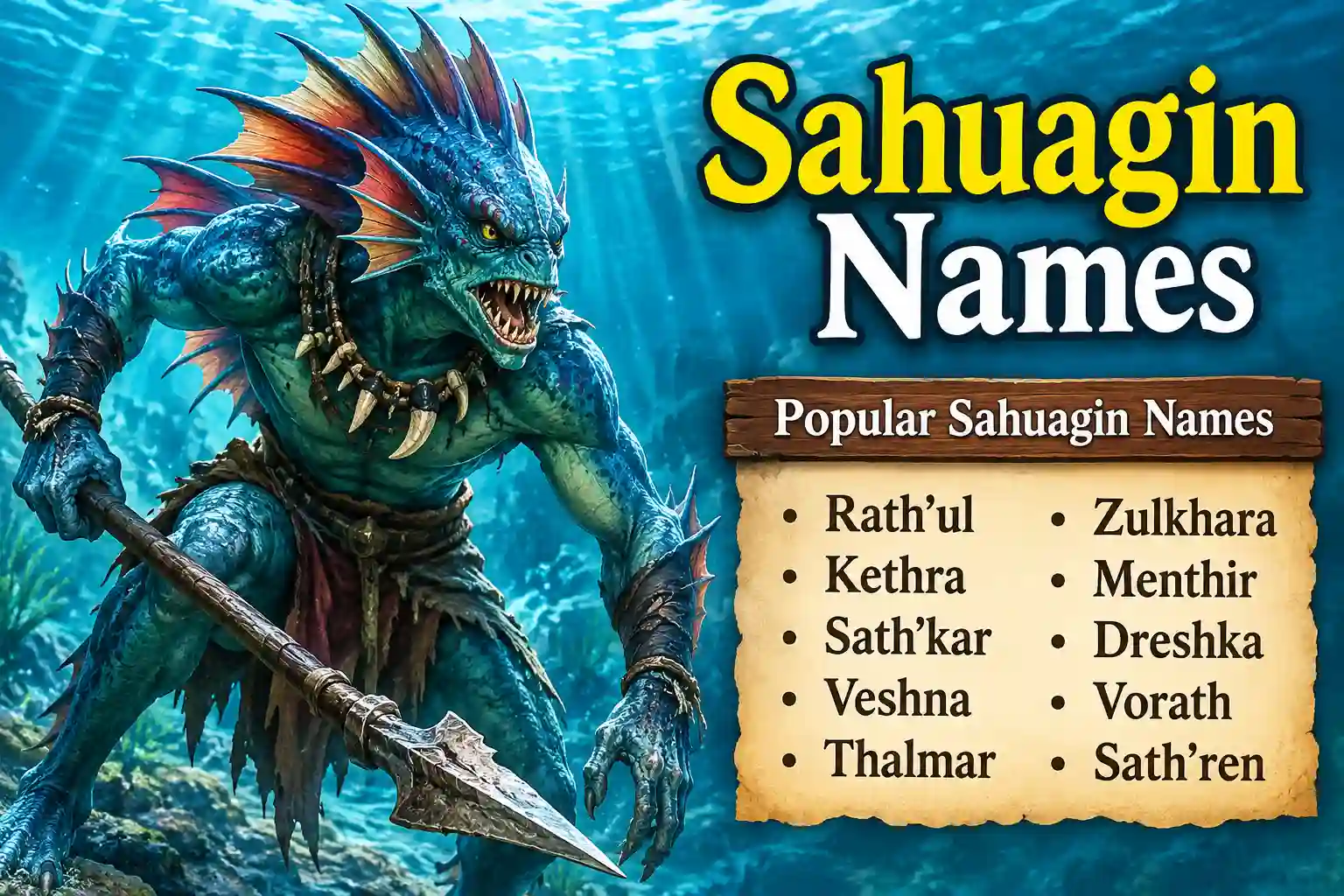
Sahuagin are dangerous sea creatures in Dungeons & Dragons (D&D). They live deep in oceans and attack ships, coastal towns, and other sea creatures.
These creatures have sharp teeth, claws, scales, and strong swimming skills. They often live in underwater groups and follow powerful leaders. Their society is built around hunting, fighting, and worshipping their shark god, Sekolah.
Sahuagin are useful monsters for fantasy stories and D&D campaigns. They can be warriors, hunters, priests, leaders, or dangerous enemies. In this guide, you will learn about their appearance, history, culture, powers, variants, names, and underwater homes.
What Are Sahuagin in Dungeons & Dragons?

Sahuagin are aquatic humanoid monsters in Dungeons & Dragons.
Sahuagin often live in tribes and underwater communities. These groups may have warriors, hunters, guards, priestesses, and powerful leaders.
In a D&D game, Sahuagin can be used as enemies, villains, guards, or important characters in an underwater adventure.
What Do Sahuagin Look Like?
Sahuagin have a frightening appearance. Their bodies have many fish-like features that help them survive underwater.
Common features may include:
- Sharp teeth for biting enemies.
- Strong claws for fighting.
- Scaly skin that protects their bodies.
- Webbed hands and feet for swimming.
- Fish-like eyes that help them see underwater.
- Fins and tails that help them move through water.
- Strong bodies made for hunting.
Different fantasy stories may give Sahuagin extra features. Some creative designs may include fin notches, scars, spines, or unusual eye colors. These details can help make each creature look unique.
Where Do Sahuagin Live?
Sahuagin live in oceans, seas, underwater caves, and deep-water areas.
Their homes may include coral reefs, dark sea caves, rocky areas, flooded grottoes, and deep ocean trenches.
Some Sahuagin groups live close to coastal towns. They may attack fishing boats or ships to find food and valuable items.
Their underwater homes can have living areas, storage rooms, guard posts, temples, and spaces for warriors.
Sahuagin Society and Culture
Different members of a Sahuagin community can have special jobs.
Warriors: Warriors protect their homes and fight against enemies.
Hunters: Hunters search for food and track sea creatures.
Priestesses: Priestesses perform religious duties and guide their people.
Guards: Guards protect underwater homes, temples, and important places.
In creative settings, these marks could include scars, fin notches, split claws, or signs of a successful hunt.
Their culture can give Dungeon Masters many ways to build interesting underwater communities.
Who Is Sekolah, the Sahuagin Shark God?
Sekolah is the shark god worshipped by Sahuagin in Dungeons & Dragons lore. He is an important part of their religion and culture.
Sahuagin value strength, hunting, and survival. Their worship of Sekolah reflects these ideas.
Priestesses may lead religious events and perform rituals for their communities. Some settlements may have temples or sacred places connected to their god.
Sahuagin Hierarchy and Leaders
Sahuagin communities often have a strong leadership system. Powerful warriors and important religious figures may hold high positions.
Sahuagin Chiefs: Chiefs lead groups and make important choices for their people.
Sahuagin Barons: Barons are powerful Sahuagin with special status. They may lead warriors and become major enemies in a campaign.
Sahuagin Priestesses: Priestesses serve their religion and may have great influence in their communities.
A leader’s position may depend on strength, skill, and religious importance. The exact system can change between different D&D settings and homebrew stories.
Sahuagin Baron 5e: Powers and Abilities

A Sahuagin baron is a powerful version of a normal Sahuagin. In Dungeons & Dragons 5e, this creature can be used as a dangerous enemy for adventurers.
A baron may have stronger fighting skills and a special place in the Sahuagin hierarchy.
- Strong melee attacks.
- Powerful bites and claw strikes.
- Underwater movement.
- Leadership over other Sahuagin.
- Fighting alongside other sea creatures.
- Protecting an underwater stronghold.
The exact statistics and abilities depend on the D&D book and edition being used.
Sahuagin Priestess 5e: Religion and Magic
Sahuagin priestesses are important religious members of their communities. They worship Sekolah and may guide other Sahuagin through rituals and ceremonies.
In a D&D campaign, a priestess can serve as a temple leader, enemy spellcaster, or important non-player character (NPC).
A Dungeon Master can use a priestess to create stories about:
- Secret underwater temples.
- Religious missions.
- Magical sea rituals.
- Tribal leadership.
- Conflicts between different groups.
- Quests connected to Sekolah.
Their role makes them useful characters in underwater adventures.
Sahuagin Variants and Different Types
Different Sahuagin creatures can have special features or roles. Here are some useful types and character ideas.
Deep Divers: A useful fantasy concept for Sahuagin who explore deep underwater places.
Reef Smashers: A creative homebrew idea for strong Sahuagin fighters who break through coral defenses.
Bloodletters: A homebrew-style name for fierce hunters or warriors.
Not every name in this list represents an official D&D monster. Some are creative ideas that Dungeon Masters can use in their own campaigns.
What Is a Malenti Sahuagin?

A Malenti is a special type of Sahuagin that looks like an aquatic elf. This unusual appearance makes Malenti useful for secret missions and spying.
They may hide among aquatic elves and collect information for their Sahuagin groups.
Their appearance can create interesting stories in D&D. Players may meet a friendly-looking sea creature without knowing its true identity.
A Dungeon Master can use a Malenti as a secret enemy, hidden spy, or important part of an underwater mystery.
Sahuagin and Sharks
Sharks are closely connected to Sahuagin culture and hunting. Sahuagin are known for their connection to these dangerous sea animals.
They may hunt alongside sharks or use them in underwater battles. These may include crabs, eels, rays, turtles, octopuses, and squids.
These monsters can guard underwater treasure or create danger near a Sahuagin settlement.
Sharks and other sea creatures can make an encounter more exciting. A group of Sahuagin warriors attacking with sea animals can create a difficult challenge for players.
Sahuagin Lairs and Underwater Strongholds
A lair may be hidden inside a dark cave, a coral reef, or a rocky underwater area. Some may be close to shipwrecks or deep ocean paths.
A Sahuagin lair may include several areas.
Warrior Halls: Places where fighters prepare for battles.
Temple Rooms: Sacred areas used for worship and rituals.
Treasure Rooms: Hidden places where valuable objects are stored.
Guard Posts: Areas watched by powerful warriors.
Hidden Caves: Secret spaces used to hide supplies or plan attacks.
A well-designed lair can give players a fun and challenging place to explore.
Sahuagin History and Enemies
Sahuagin are known for their violent conflicts with other underwater groups. They may fight for territory, food, and control of important sea areas.
Their enemies can include aquatic elves, merfolk, and coastal settlements. These ideas can help Dungeon Masters create a larger ocean world.
Sahuagin Adventure Hooks for D&D Campaigns
Sahuagin can make exciting enemies in underwater and coastal adventures. Dungeon Masters can use them to create many different stories.
The Missing Fishing Boats: Several fishing boats disappear near a small coastal town. Players must find out who is behind the attacks.
The Hidden Temple: An ancient temple of Sekolah has been found under the sea. The adventurers must explore it and discover its secrets.
The Secret Spy: A Malenti is hiding among an underwater community and collecting information.
The Baron’s Army: A powerful Sahuagin baron is preparing an attack on a coastal settlement.
The Shark Hunt: A group of dangerous sharks is protecting a hidden Sahuagin stronghold.
The Ghost Ship: A strange ship appears near the coast.
The Deep Cave: A group of hunters has found a hidden cave filled with strange creatures and old treasure.
These adventure hooks can help Dungeon Masters build exciting campaigns around the sea devils.
Sahuagin vs. Aquatic Elves
| Feature | Sahuagin | Aquatic Elves |
| Nature | Often aggressive | Depends on the setting |
| Home | Oceans and underwater caves | Underwater settlements |
| Culture | Tribal and strength-based | Elven traditions |
| Religion | Sekolah worship | Varies by setting |
| Fighting style | Group hunting and attacks | Skilled weapons and magic |
These differences can help Dungeon Masters create stories about underwater wars, alliances, and territorial conflicts.
Sahuagin Names and Naming Traditions

Names can help make a Sahuagin character feel real.
Creative Sahuagin names often use sharp sounds, strong consonants, and unusual letter combinations.
A Dungeon Master can create different naming styles for:
- Male Sahuagin warriors.
- Female Sahuagin priestesses.
- Young Sahuagin hatchlings.
- Powerful barons and chiefs.
- Older tide elders.
- Hunters and guards.
- Cities, caves, and reef settlements.
Some creative naming traditions may use a title, a family name, or an epithet based on a character’s achievements.
For more character ideas, see our complete guide to Sahuagin Names, which includes male, female, D&D, fantasy, and city name ideas.
Sahuagin Cities and Settlement Ideas
Sahuagin cities can be built around coral reefs, deep caves, and underwater strongholds. These places may have homes, temples, training areas, and treasure rooms.
Here are some creative city and settlement name ideas:
- Bloodreef
- Deepmaw
- Sharkspire
- Blacktide Hold
- Coralgrasp
- Fangdepth
- Stormfin
- Redcurrent
- Abyssclaw
- Nightreef
- Wavecrush
- Skulltide
These names are fantasy ideas, not official locations from D&D. You can use them for homebrew campaigns, maps, stories, or role-playing games.
Sahuagin Weapons and Treasure
Sahuagin may use weapons and treasure that fit their underwater lives. Their equipment can include spears, tridents, blades, shields, and objects made from coral or other sea materials.
Dungeon Masters can create special treasure for a Sahuagin lair.
Some creative treasure ideas include:
- Blood Pearl.
- Sharkfang Crown.
- Coralblade.
- Tidecaller Idol.
- Stormscale Armor.
- Reefstone Amulet.
- Wavebinder Trident.
- Bloodreef Chalice.
- Oceanheart Gem.
- Deepmaw Necklace.
These are original fantasy item ideas. They can be used as rewards, magical objects, or important parts of an adventure.
How to Create a Sahuagin Character
Creating a Sahuagin character can be fun for a homebrew story or campaign.
Start by thinking about the character’s background and personality.
These steps can help you create a character who feels like part of the Sahuagin world.
Are Sahuagin Good or Evil?
Sahuagin are often shown as dangerous enemies in Dungeons & Dragons. They may attack ships, hunt other creatures, and fight over underwater territory.
A Dungeon Master can create a Sahuagin group with its own goals, rules, and reasons for fighting.
This gives players more ways to interact with them.
Why Are Sahuagin Dangerous?
They can swim quickly, attack in groups, and use their underwater homes to their advantage.
Their sharp teeth and claws make them dangerous in close combat.
The exact rules can differ between D&D editions. Always use the monster statistics from the rulebook your group is playing.
How to Use Sahuagin in a D&D Campaign

Sahuagin can be used in many parts of a D&D campaign.
They can appear as:
- Enemies attacking a coastal village.
- Guards protecting an underwater temple.
- Hunters searching for a lost treasure.
- Spies working among aquatic elves.
- Warriors serving a powerful baron.
- Enemies fighting pirates or other sea creatures.
FAQs
Sahuagin are fish-like humanoid monsters that live underwater. They are known as sea devils and often attack ships and coastal settlements.
Sahuagin are fantasy humanoid creatures with fish-like features. They have scales, sharp teeth, claws, and bodies made for swimming.
Sahuagin worship Sekolah, a shark god connected to hunting, strength, and their underwater culture.
They live in oceans, underwater caves, coral reefs, and other deep-water places.
A Sahuagin baron is a powerful version of a Sahuagin. It can serve as a leader and a strong enemy in a D&D campaign.
A Sahuagin priestess is a religious figure who worships Sekolah and may guide her community through rituals and religious duties.
A Malenti is a special Sahuagin that looks like an aquatic elf. It may be used as a spy among underwater communities.
Yes. Sahuagin are aquatic creatures that can breathe underwater and are adapted to life in the sea.
The standard Sahuagin monster is not automatically a player character option in every 5e ruleset. Players should check their campaign’s approved species and homebrew rules.
Their enemies may include aquatic elves, merfolk, coastal communities, and other underwater creatures, depending on the campaign setting.
A Sahuagin is a humanoid sea monster with arms, legs, and fish-like features. A shark is a sea animal with a different body shape and behavior.
A Sahuagin lair is an underwater home or stronghold. It may have living areas, guard posts, temples, treasure rooms, and hidden caves.
Sahuagin names often use strong sounds and fantasy-style letter combinations. Names can be created for warriors, priestesses, barons, hatchlings, elders, and underwater cities.
Final Thoughts
Sahuagin are an interesting part of the Dungeons & Dragons world. Their underwater homes, powerful leaders, shark god, hunting skills, and different roles make them useful creatures for fantasy adventures.
From ordinary warriors to powerful barons and priestesses, they offer many ways to build exciting stories.

Ethan Blackwood is a fantasy naming writer and editor at TheFantasyNames.com. He enjoys exploring mythology, fantasy worlds, legendary creatures, historical cultures, and the art of creating names that feel believable and memorable.
Ethan writes about fantasy names for characters, creatures, races, kingdoms, weapons, and fictional worlds. He also explores naming styles inspired by mythology, history, folklore, and popular fantasy settings.
His goal is to help writers, gamers, creators, and fantasy fans find names that fit the story, personality, and world they are building.